
Wilson v Kiama Municipal Council [2026] NSWLEC 1423 and the earlier decision in Sharp v Kiama Municipal Council [2024] NSWLEC 1360 confirm that the minimum lot size control for the erection of a dwelling house under clause 4.2A of the Kiama Local Environmental Plan 2011 is a development standard. The control is open to variation under clause 4.6.
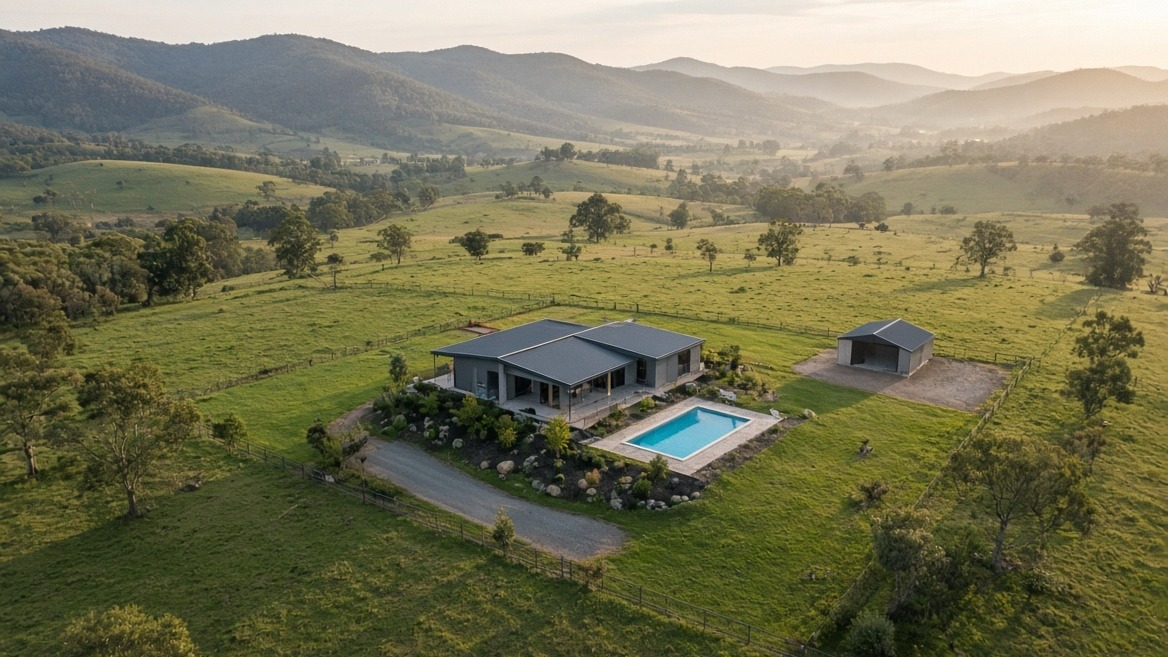
In both cases the Court granted consent for a dwelling house on a lot smaller than the 40 hectare minimum shown on the Lot Size Map. In Wilson the site measured 30.23 hectares, a shortfall of 9.77 hectares or 24.4 per cent. The approved development comprised a dwelling house, swimming pool, farm building and associated access. The Court found that the clause 4.6 written request demonstrated that compliance with the standard was unreasonable or unnecessary in the circumstances and that sufficient environmental planning grounds existed to justify the contravention.
“Dwelling entitlement” is not a statutory term
The phrase “dwelling entitlement” does not appear in the Kiama LEP or in the Environmental Planning and Assessment Act 1979. In Wilson the Council accepted that the expression is informal shorthand for the ability to obtain consent for a dwelling under clause 4.2A. The Court treated the control as a development standard capable of variation. A justified clause 4.6 request can produce a planned outcome that achieves the objective of minimising unplanned rural residential development. Numerical compliance with the mapped minimum is not required for the objective to be met.
Similar controls appear in many other local environmental plans. They commonly apply in rural zones (RU1, RU2, RU4, RU6), R5 Large Lot Residential zones, and environmental or conservation zones (C2, C3, C4). Where the clause is drafted as a development standard that withholds consent unless the lot meets the minimum size shown on the Lot Size Map, the same pathway is available.
Application in Tweed, Byron and Ballina
The same principle applies under the Tweed Local Environmental Plan 2014 (clause 4.2B), the Byron Local Environmental Plan 2014 (clause 4.2A) and the Ballina Local Environmental Plan 2012 (clause 4.2A). Each contains a control that withholds consent for a dwelling house unless the lot meets the minimum size shown on the Lot Size Map. The clauses apply in rural zones and, in Tweed and Byron, also in R5 or environmental zones. The drafting matches the Kiama provision that the Court held to be a development standard open to clause 4.6. In these local government areas, where housing demand is high, lots that fall short of the mapped minimum and that have been treated as having no dwelling entitlement can be the subject of a development application accompanied by a properly prepared clause 4.6 request.
Practical scope
The practical scope is the large number of lots in rural, R5 and environmental zones that fall short of the mapped minimum and that have previously been treated as having no “dwelling entitlement”. Those lots can now be the subject of a development application accompanied by a properly prepared clause 4.6 request. The request must demonstrate that compliance is unreasonable or unnecessary in the circumstances and that there are sufficient environmental planning grounds to justify the contravention. Site-specific matters remain relevant. These include the capacity of the land to support continued agricultural or compatible use, the clustering of the dwelling with existing infrastructure to limit land-use conflict, the scale and siting of the building, and consistency with the objectives of the zone and the standard.
In standard urban residential zones (R1, R2, R3 and most R4) dwelling houses are ordinarily permitted with consent on an existing lot. The minimum lot size control in clause 4.1 governs subdivision rather than the erection of a dwelling on land already created as a lot. In those zones the pathway does not arise for a single dwelling house.
Implications for assessment
Councils that treat the absence of “dwelling entitlement” as a jurisdictional bar, or that insist a planning proposal is the only available route, face a weaker position where the control is a variable development standard and a competent clause 4.6 request is lodged. Assessment should focus on the merits of the written request and the development application. Engineering, bushfire, wastewater, biodiversity and other matters continue to apply in the ordinary way under section 4.15.
Housing supply context
NSW policy settings directed at increased housing supply, including the National Housing Accord targets and recent reforms to the planning system, favour outcomes that deliver additional dwellings on existing lots where the environmental planning grounds are sound. A well-prepared clause 4.6 request that supports ongoing primary production or compatible use and avoids cumulative impacts aligns with those settings. Councils and assessing officers can process such applications on their merits without treating the numerical shortfall as a reason for delay or refusal. This is particularly relevant in local government areas such as Tweed, Byron and Ballina, where housing demand remains high and undersized rural and large-lot residential land is common.
Practical steps
Landowners and practitioners should check the precise wording of the relevant clause in the applicable local environmental plan. Where the control operates as a development standard in a rural, R5 or environmental zone, a clause 4.6 written request can be prepared and lodged with the development application. The request should address the objectives of the standard and the zone, identify site-specific environmental planning grounds, and demonstrate that the proposal minimises unplanned development of the kind the standard seeks to control. Early engagement with the consent authority on the technical reports that will accompany the application remains useful.
The judgments confirm a clear and available pathway. Landowners with undersized lots in rural, R5 or environmental zones in local government areas such as Tweed, Byron and Ballina can now prepare and lodge development applications for dwelling houses supported by properly drafted clause 4.6 requests. Councils can assess those applications on their merits. Practitioners and applicants who assemble the required environmental planning grounds and technical reports are in a position to advance these proposals through the ordinary assessment process. Unlock your land today!